


At a glance
Slow quotes cost revenue. Inaccurate quotes cost margin. The best quoting process does both jobs at once: it helps estimators respond faster while using better cost data, clearer assumptions, and feedback from actual production performance.
In fabrication, quoting is not just an admin task. It determines whether the shop wins the job, whether the job is profitable, whether production can deliver it, and whether the customer trusts the business enough to come back next time.
A slow quote can lose the job. A rushed quote can win the wrong job.

Why quoting is so hard in job shops
Quoting in a job shop is difficult because the work is rarely standard. One customer sends a drawing for a one-off bracket. Another needs laser-cut and folded parts. Another needs welded assemblies, machining, finishing, outside coating, or something similar to a past job but different enough to make the old price unreliable.
Every quote requires judgement. The estimator has to consider material, labour, machine capacity, setup, routing, waste, lead time, and risk. They also need to understand how the work will actually flow through the shop once it is won.
A quote is more than material plus margin
Material prices change, waste varies, setup time gets underestimated, bottleneck machines are overlooked, outside processes slip, freight gets complicated, and old templates stop reflecting current operating costs. Good quoting needs to account for all of that without turning every estimate into a consulting project.
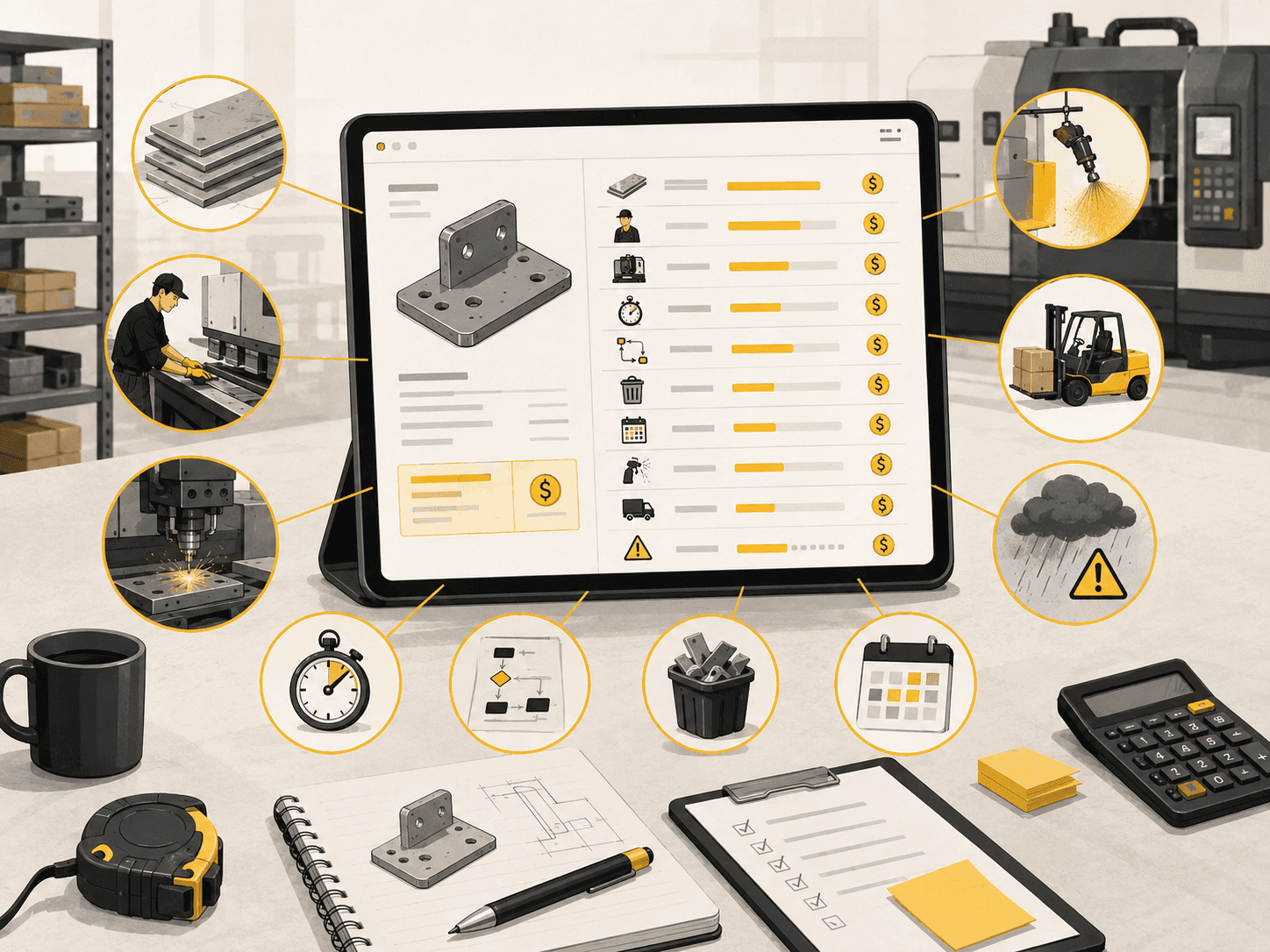
The hidden risk of estimator memory
Most fabrication shops rely heavily on estimator judgement. That is not a bad thing. Good estimators understand the work in a way software alone cannot. But there is a difference between using judgement and relying entirely on memory.
Memory becomes risky when rates are outdated, material prices have moved, similar jobs are hard to find, actual production time was never captured properly, or the estimator does not know which jobs lost margin last time. It also creates risk when a new estimator joins and has no reliable history to learn from.
Slow quotes lose good opportunities
Customers do not always choose the cheapest supplier, but they do notice responsiveness. If a customer sends an enquiry to three suppliers and one responds quickly with a clear, professional quote, that supplier has an advantage. Slow quoting makes the shop look overloaded, disorganised, or difficult to deal with.
Fast quotes can still leak margin
There is another danger: quoting quickly by guessing. Setup time is underestimated, material waste is missed, outside processing takes longer than expected, delivery is more complex than assumed, or customer changes are never re-costed. The quote looked fine on paper, but the job did not perform as expected.
The quoting process should learn from production
The best quoting process is not isolated from the rest of the business. It should learn from what actually happened on the floor. If a certain type of part always takes longer to set up, the quoting process should reflect that. If actual labour time differs from quoted labour time, the business needs to know.

Better quotes come from better production feedback
A connected loop looks like this: quote, win job, schedule work, capture actuals, review margin, and improve the future quote. Spreadsheet-based quoting often breaks that loop, leaving estimators to quote from assumptions rather than evidence.
What a better quoting process looks like
A better quoting process does not remove estimator judgement. It supports it with consistent cost inputs, easy access to job history, actual production feedback, and a clear link between quoting and capacity. The estimator should not have to rebuild the same logic from scratch every time.
Practical steps to improve quoting
Start by reviewing the last 20 to 50 jobs. Which quotes took longest to prepare? Which jobs had the biggest difference between quoted and actual time? Which customers required the most rework or changes? Which materials created the most pricing uncertainty? Those answers reveal where the quoting process is weakest.
Next, standardise the basics: cost categories, updated rates, recorded assumptions, quote turnaround time, and quoted-versus-actual performance. These steps improve discipline, but if the business wants quoting to scale, it needs a connected system.
Final thought
Slow quotes cost good jobs. Inaccurate quotes cost margin. Fabricators need both speed and accuracy, which means giving estimators better data, better structure, and a clearer connection to what actually happens on the shop floor. MirrorWorks helps fabrication SMEs quote faster, plan better, and learn from every job they deliver.
Start waitlist


How long does implementation take?
Is MirrorWorks built for custom fabrication work?
Can we move from spreadsheets gradually?
Can I see MirrorWorks in action?