Job costing software, without the month-end panic
Job costing software, without the month-end panic
Job costing software, without the month-end panic

Invoicing, job costing, and Xero sync built into the same system that makes the parts. Labour from Make, materials from Buy, overhead allocated automatically. See margin on every job before it ships, not three weeks later. Invoices draft themselves when dispatch confirms delivery. Xero handles the statutory side, MirrorWorks handles the operational side. No double entry, no month-end scramble.
Invoicing, job costing, and Xero sync built into the same system that makes the parts. Labour from Make, materials from Buy, overhead allocated automatically. See margin on every job before it ships, not three weeks later. Invoices draft themselves when dispatch confirms delivery. Xero handles the statutory side, MirrorWorks handles the operational side. No double entry, no month-end scramble.
Invoicing, job costing, and Xero sync built into the same system that makes the parts. Labour from Make, materials from Buy, overhead allocated automatically. See margin on every job before it ships, not three weeks later. Invoices draft themselves when dispatch confirms delivery. Xero handles the statutory side, MirrorWorks handles the operational side. No double entry, no month-end scramble.
1
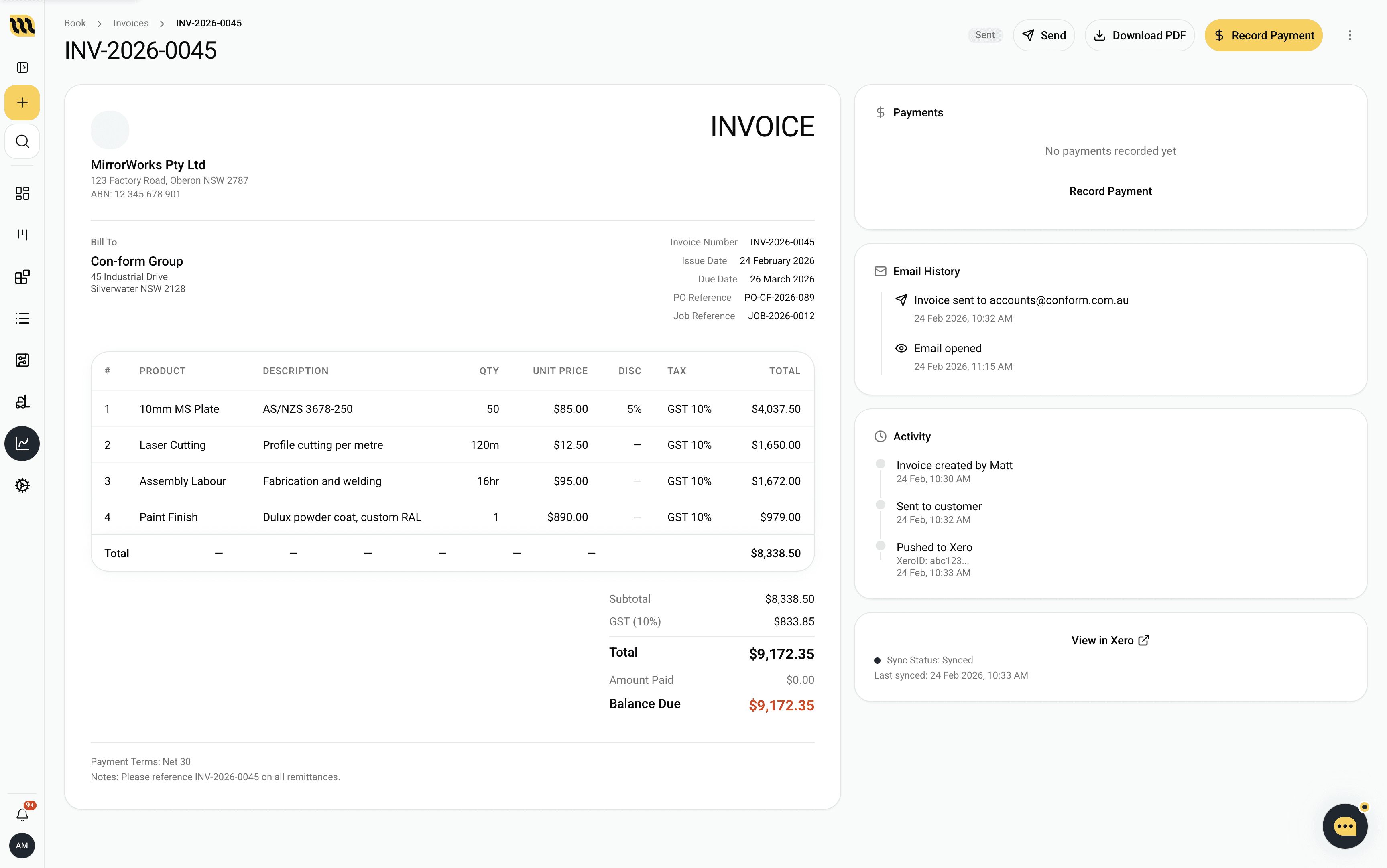
Auto-invoice on delivery
Ship confirms, Book invoices.
When a dispatch is marked delivered, the invoice drafts itself against the sales order and syncs to Xero. Month-end stops being a scramble.
2
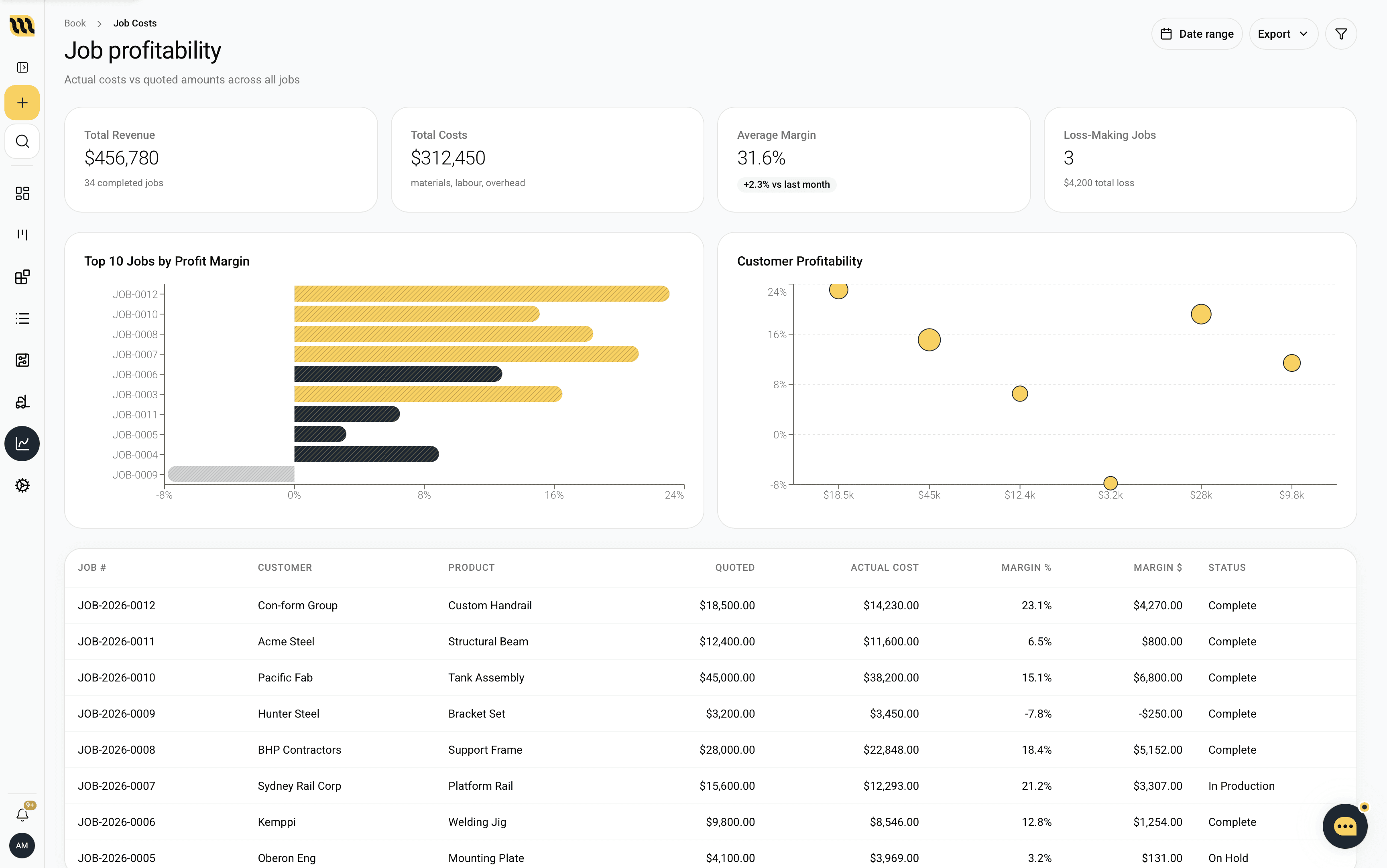
Live job costing
Live job costing
Live job costing
Actual cost, not estimated.
Actual cost, not estimated.
Labour from Make, materials from Buy, overhead allocated automatically. See margin on every job before it ships, not three weeks later.
Labour from Make, materials from Buy, overhead allocated automatically. See margin on every job before it ships, not three weeks later.
3
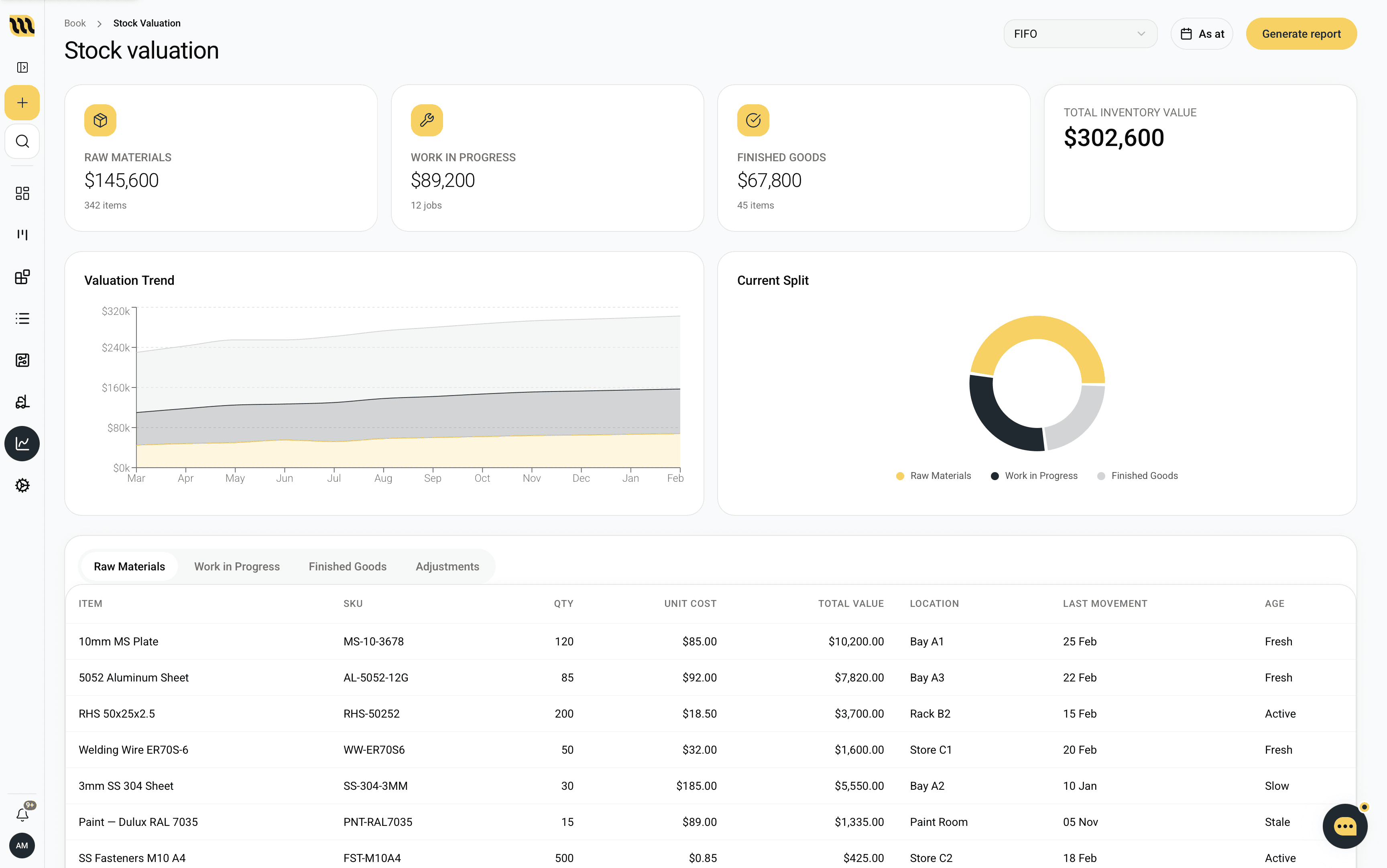
WIP at a glance
WIP at a glance
WIP at a glance
Money tied up in half-built jobs.
Money tied up in half-built jobs.
Financial value of partially completed work, updated daily. Know what your shop owes you before the accountant asks.
Financial value of partially completed work, updated daily. Know what your shop owes you before the accountant asks.
4
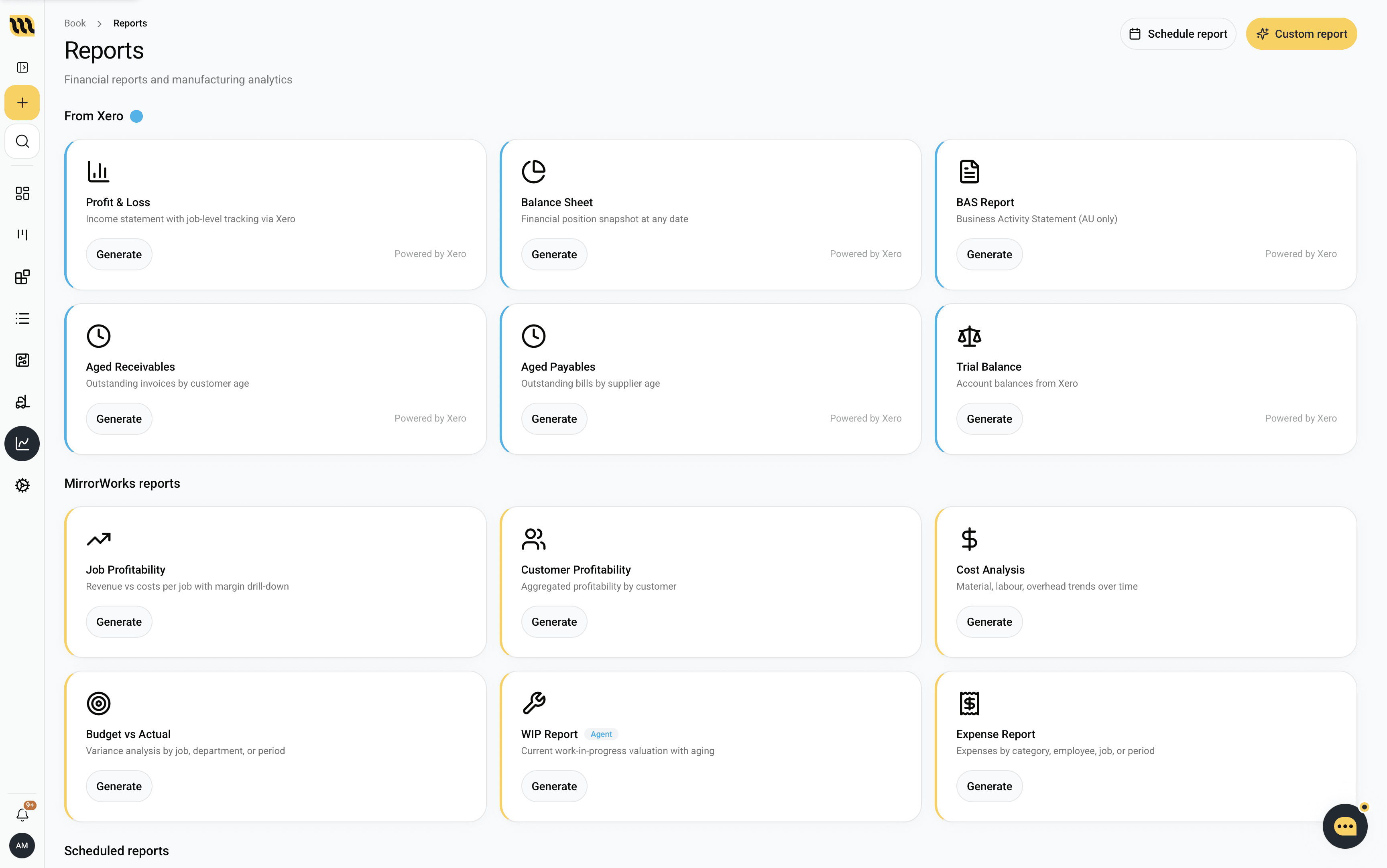
Xero sync
Xero sync
Xero sync
One ledger, two views.
One ledger, two views.
Invoices, bills, and payments flow both ways. Job cost data stays in MirrorWorks where the shop can see it.
Invoices, bills, and payments flow both ways. Job cost data stays in MirrorWorks where the shop can see it.
5
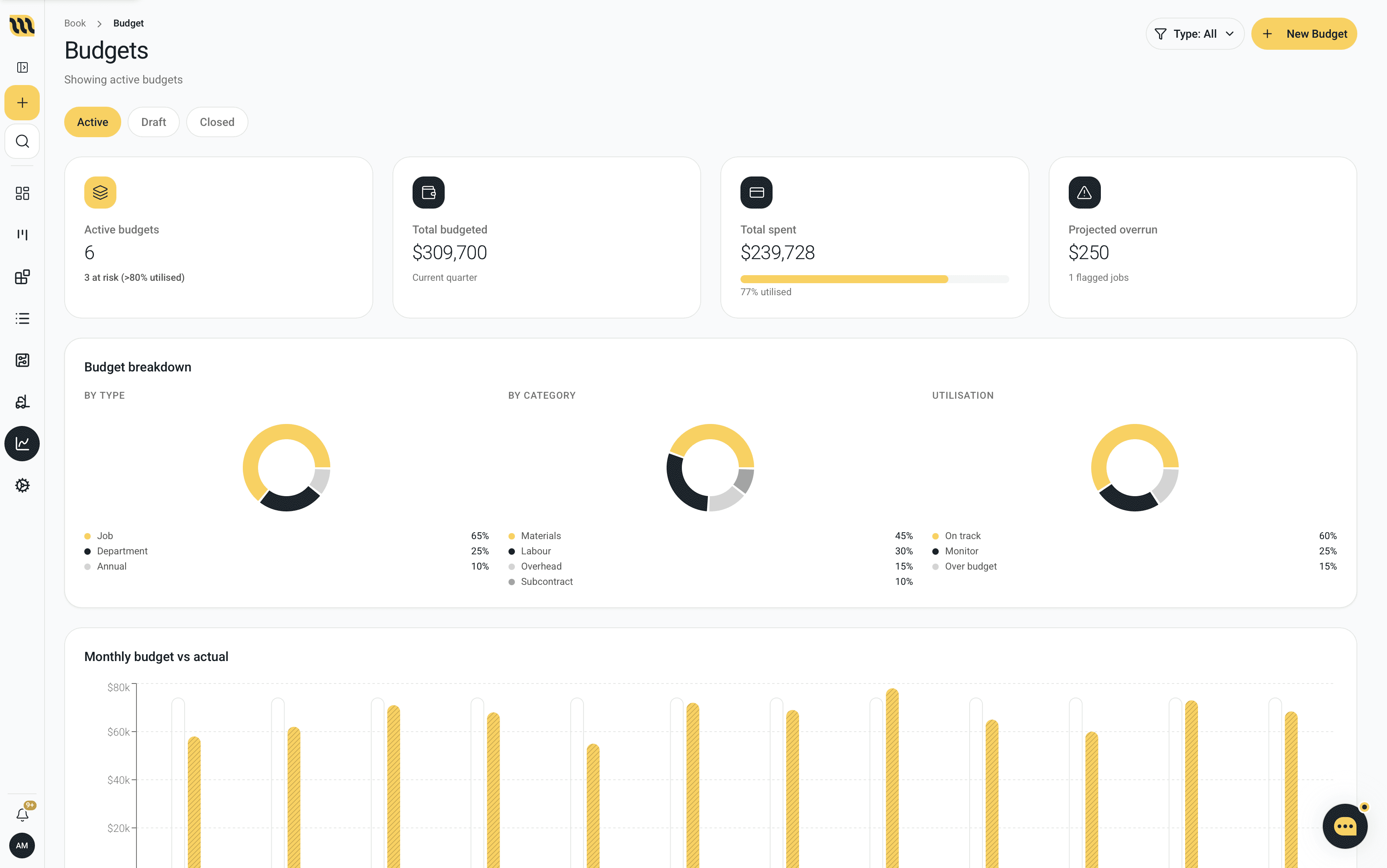
Budget vs actual
Budget vs actual
Budget vs actual
See the slip before it’s a problem.
See the slip before it’s a problem.
Compare quoted cost against actual by job, by department, by period. Flag overruns while the job is still on the floor.
Compare quoted cost against actual by job, by department, by period. Flag overruns while the job is still on the floor.

Mostshopsonlyknowtheirmarginattaxtime.
Mostshopsonlyknowtheirmarginattaxtime.
Mostshopsonlyknowtheirmarginattaxtime.
Quotes are done in one system, time is tracked in another, materials go into a third. By the time the bookkeeper pulls it together, the job is six weeks gone and there's nothing you can do about a bad one.
Quotes are done in one system, time is tracked in another, materials go into a third. By the time the bookkeeper pulls it together, the job is six weeks gone and there’s nothing you can do about a bad one.
Quotes are done in one system, time is tracked in another, materials go into a third. By the time the bookkeeper pulls it together, the job is six weeks gone and there’s nothing you can do about a bad one.
MirrorWorks brings costing into the same system as quoting and production. Every hour clocked on the floor, every sheet pulled from stores, every PO raised against the job lands in Book the day it happens. You see the P&L of a job while it’s still running, which means you can catch bad estimates, scope creep, and rework before they eat the margin. Xero handles the statutory side; MirrorWorks handles the operational side. Included in Make, from A$25 per user per month.
MirrorWorks brings costing into the same system as quoting and production. Every hour clocked on the floor, every sheet pulled from stores, every PO raised against the job lands in Book the day it happens. You see the P&L of a job while it’s still running, which means you can catch bad estimates, scope creep, and rework before they eat the margin. Xero handles the statutory side; MirrorWorks handles the operational side. Included in Make, from A$25 per user per month.

Financial clarity
From quote, to make, to invoice.
Financial clarity
From quote, to make, to invoice.